Thursday, September 3, 2009

Mysteries of the Underground

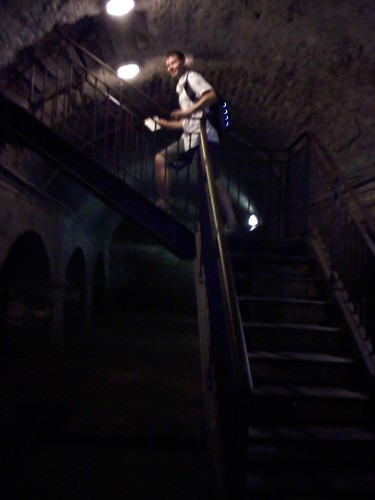
The temperature cooled rapidly as we descended the narrow stairway beneath the town hall. A musty odor grew stronger with each new chamber we entered. Finally, we ducked through a improvised hole in the ancient masonry ceiling and emerged into a large underground liar. By the echoing of our voices, we could sense that the room was massive. Once our eyes adjusted to the dim lighting, we realized that we were standing among the porticos of the ancient Roman forum of Arles.

picture0126

Arles offers visitors a rare chance to fully experience engineering marvels of a Roman city. The big three attractions include the amphitheater, theater and baths. However, hidden two stories beneath the modern-day streets, visitors can still walk the streets of the ancient Roman city in the crypts of Arles.

Walking through the dark passages, it's easy to let your imagination run wild. I felt a little like Indiana Jones. Of course, the crypts are now a big tourist draw, so it's adequately lit and fire evacuation routes are listed. Still, I wanted to speculate how the underground passages might have been used in medieval times. Were they inhabited by gangs of thieves and gypsies, or was it more like a garbage heap? Do you think people would have fled into the tunnels if Arles had been the target of Allied bombing in World War 2. The potential for that kind of speculation really made this tour special.
Reblog this post [with Zemanta]

Arles, Roman Metropolis

I first visited Arles two years ago. The well-preserved Roman ruins captured my imagination. I wrote the following account in a local restaurant that very day. On my second visit, I was equally impressed with the city.

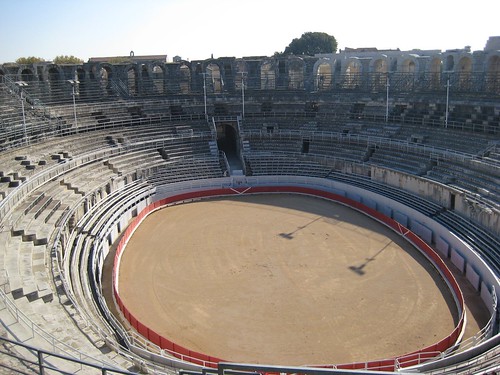
(November, 2007) The Roman Amphitheater or Arles sits at the highest point in the city and still dominates its surroundings. Amazingly, even though the structure was built in 90 A.D., it is still being used today - regularly showing bull fights since 1830. The monument is 136 m (~450 ft) long and is ringed by 60 arches. Twenty thousand spectators could have been comfortably seated to watch gladiator duels and exotic animals fight. In the middle ages, the structure was converted into a fortress. At that time, over 200 homes and two churches took up residence within the friendly confines.

IMG_0641

I entered through the front gate, just like a typical Roman would have done. It wasn't hard to imagine the bowl filled with thousands of spectators. I hiked up to the top of one of the medieval towers for a bird's-eye view. From that vantage, I could see all of Arles, and I imagined how medieval watchmen would have been able to spot invaders from miles away. Only a slight metal grandstand reminded me that it was 2007. Having worked on some stadiums back home, I was surprised by how little the basic arena concept has changed.

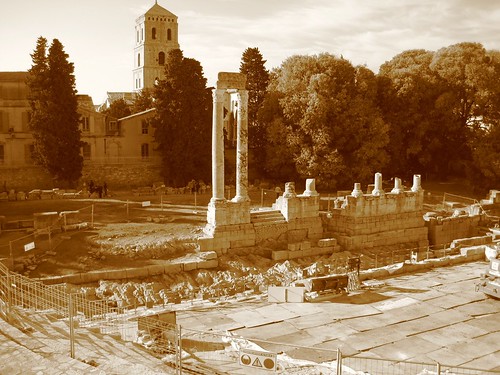
Next, I viewed the ruins of a Roman theater. The structure was originally built up off of ground level and included two levels of seating and huge stage area. In ancient times it would have looked much like a modern performance hall. History has not treated the first century B.C. structure as well as the adjacent amphitheater. Only the lower seating bowl and two of the hundreds of ornate columns that would have decorated the structure still remain.

RomanTheater

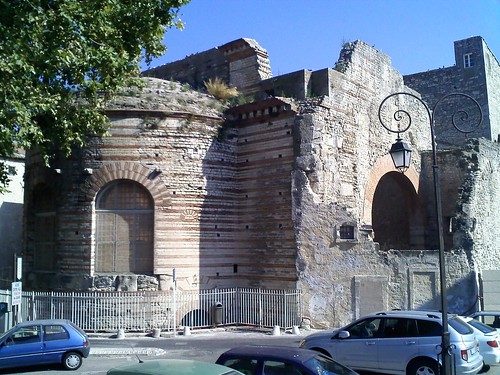
Entertainment may have been for special occasions, but every afternoon, the Roman population would visit the baths. The process included a sauna treatment, hot bath, lukewarm rinse, some laps in the swimming pool and finally a massage. Much of the Roman baths of Arles remain to this day. Unfortunately, only a half-dome remains of the roof, and most of the floors are also gone. This allows modern visitors to walk through the ancient furnace rooms.

picture0120

I had a great time exploring the Roman ruins, market squares, and natural wonders of Provence. It is easy to see why so many people continue to visit the region in search of a muse. A special experience awaits those who can draw inspiration from the magnificent historic structures.
Reblog this post [with Zemanta]

A Taste of Perrier

In all our travels around le Gard, we have encountered very few tourist traps. I doubt the French would tolerate Waldrug or the Corn Palace (I’m looking at you South Dakota). At times, however, I think they can be overly sympathetic to National icons past their prime. This was the case with the Perrier bottling plant and château.

When ordering water in Europe, the waiter is likely to ask, “with gas or without.” In Denmark, a bubbly mineral water called danskvand is the default. It’s hard to say where this trend was started, but the Perrier brand has certainly won the international name recognition award. They’ve even managed to convince some gullible Frenchmen that the carbonated drink provides suitable refreshment after athletic activities.

Perrier is bottled locally, just outside Montpellier. It’s said that M. Perrier discovered the natural spring at the very location that the plant continues to operate. He also built a nice little mansion, which now houses the Perrier advertising museum. However, the surrounding gardens are actually the most interesting part of the visitor’s center.


We did manage to sneak into a tour group long enough to see a video of the bottling process. However, the actual plant tour is only available by special reservation. One can only imagine the secrets that might be found within ;)

It’s clear that attempts have been made over time to modernize the visitor center, but the only area in which it truly excels is in the unintentional comedy of a brand struggling to remain relevant. Like zoinks, if you don’t drink enough refreshing Perrier on a hot day, your Volkswagon mini-bus is likely to melt. And I think the Russian ad campaign sounded something like, “Drink Perrier, it’s better than communism.” Maybe I don’t understand Cyrillic text.


Like the drink itself, the Perrier visitor center left me expecting a bit more flavor.
Reblog this post [with Zemanta]

Wednesday, September 2, 2009

Cassis

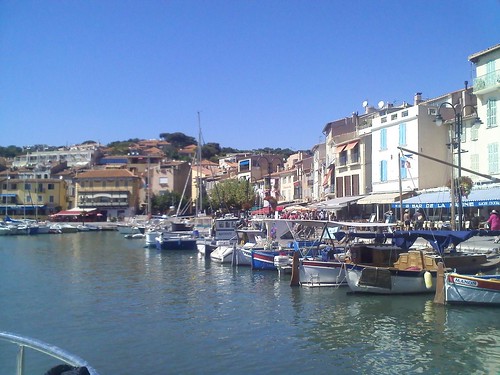
France's Mediterranean coast is regarded as one of the top vacation destinations in the world. The rich and famous have long realized the charm of the Riviera. The azure colored sea, sunny skies and picturesque coastal rock formations paint the perfect setting for relaxation. Larger cities like Cannes, Nice and Monaco provide the services and nightlife demanded by more active travelers - but for a price.

On short notice, it was impossible for us to find an affordable hotel in any of the major coastal towns. In the end, we settled for a room in Aix - just 20 minutes from the coast and the town of Cassis. Though not technically considered part of the traditional Riviera, Cassis offers the quintessential Mediterranean experience.

picture0084

Our first glimpse of the city came as we emerged through a coastal mountain pass. From high above the city, we could see the landscape transform from cliffs to village to beach to harbor. Perched above the city was an old castle that now appeared to be an extremely high-end resort. We followed the winding road through some vineyards and into the busy vacation town. Parking, as usual, was a challenge. But soon enough, we were on our way to the Côte Azur.

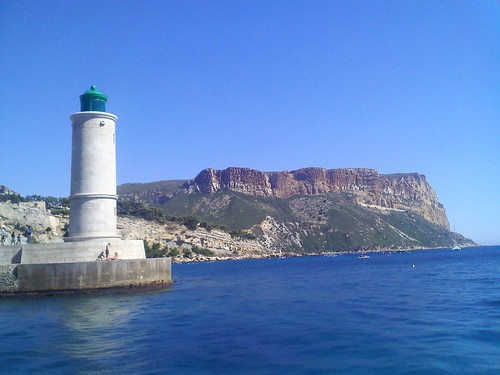
Our first stop was to get tickets for a boat tour of the nearby calanque. These narrow inlets reminded me of the Norwegian fjords. Our 45 minute boat tour took us to three calanques. In most cases, the inlets were carved into the limestone through several centuries of erosion. However, we learned that one of the calanques was actually the result of mining activities that continued until relatively recently. The highlight, however, was the view of Cassis and a huge muli-hued cliff face from the sea.

picture0088

Like most of the Riviera, the beach in Cassis is rocky. It's extremely uncomfortable to walk along barefoot, and most people bring a special mat to lay on. We hobbled to the water and tip-toed in. As warm as the water must have been, it seemed shockingly cold after standing in the hot sun. We also noticed a very quick drop-off. This experience was quite different from the sandy beaches that we used to go to back home in the Thumb of Michigan.

picture0099

View more of my photos of Cassis on Flickr.

City of Fountains

Aix-en-Provence was founded by the Romans in the 2nd century B.C. The site was chosen for its naturally occurring hot springs. Today, a small archaeological pit marks the site of the presumably vast Roman baths. However, scores of spring-fed fountains are located throughout the city. On our latest visit to the city, I noted with curiosity that most of the fountains are labeled eau non-potable (water not-for-drinking).

Some visitors come simply to visit all of the unique fountains. Mary Ann likes the fountain of the four dolphins, but my sister thought that they looked a bit angry. My favorite fountains are the two large mossey stones in the Cour Mirabeau. These fountains located in the cities central thoroughfare stay green and warm year round because of the warm springs that they are supplied by.

4Dolphins WarmSpring

Like most sizable French cities, market day is the most active day of the week. We've always done well at the Aix market. I was able to pick up a nice button down shirt for 5€ on this latest trip. We'll have to go back in Fall, once the merchants switch over to fall apparel.
Reblog this post [with Zemanta]

Tuesday, September 1, 2009

Picasso vs. Cézanne

Many people choose to appreciate art simply at face value. However, knowing a little about the artist, their methods, and motivation can help the viewer more completely understand the meaning of the work. An exposition currently showing at the Musée Granet in Aix-en-Provence is designed to provide insight on two master painters: Cézanee and Picasso. By presenting works by both painters side-by-side, the exhibit describes how they are linked stylistically, culturally, and geographically.

On first glance, it might seem strange to find such connections between a French Impressionist and a Spanish Cubist. But even though they never met, Picasso described Cézanne as a soul mate and "artist father." He carefully studied Cézanne's work and collected many of his pieces. Eventually, Picasso purchased a chateau at the foot of Mons Saint Victoire, the object of Cézanne's most famous works. The photo below is taken from the very location that Cézanne is said to have painted his masterpieces of the mountain.
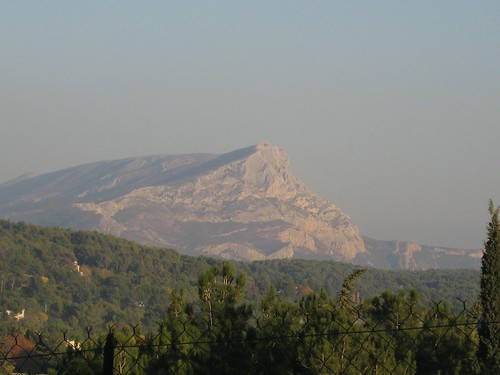
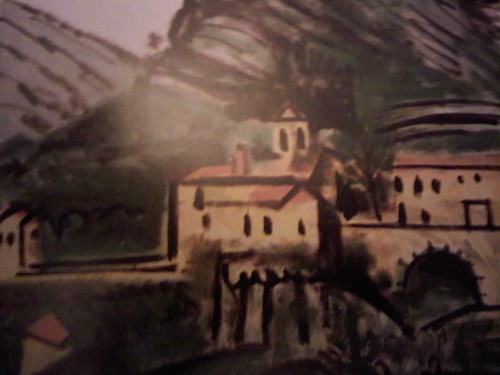
MtStVictoire picture0004

Piscasso never dared to duplicate Cézanne's paintings of Mt. St. Victoire. In fact, he rarely painted landscapes. However, he felt a superstitious call to capture the image of a new home through his brush. Picasso's impression of Le Château de Vauvenargues is pictured above.

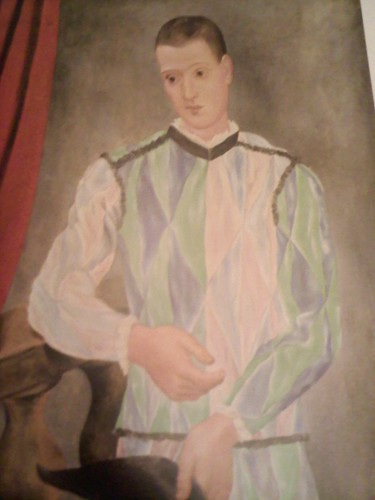
Throughout his career, Picasso took Cézanne as inspiration. Early on he studied Cézanne's methods and subjects. When some of these early works are placed side by side, it's difficult to distinguish which artist painted which painting. This is evident in a series of Harlequin paintings. The comedic dancers would have been well known by both men living near the Mediterranean. Note: Picasso's harlequin is on the right.

picture0007 picture0006

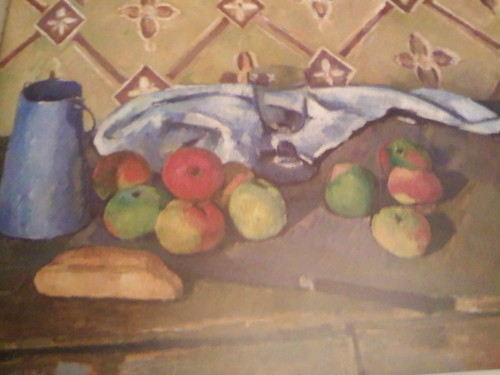
Picasso's relationship with Cézanne's work went well beyond imitation. He recognized that Cézanne was exploring new ways of representing depth in still art. Later in his career, Cézanne retreated into his studio and began obsessively painting still life portraits of household items and table settings. In many of these paintings, he skews the surface of the table and arranges the objects such that there is a greater illusion of depth projected. In the painting below, it's no accident that the knife overhangs the edge of the table. Picasso picked up on these subtleties and experimented with ways to exaggerate the perspective. In several of his own still life paintings, he reduces the scene to only the basic elements necessary to convey mass, space and depth.
picture0001 picture0002

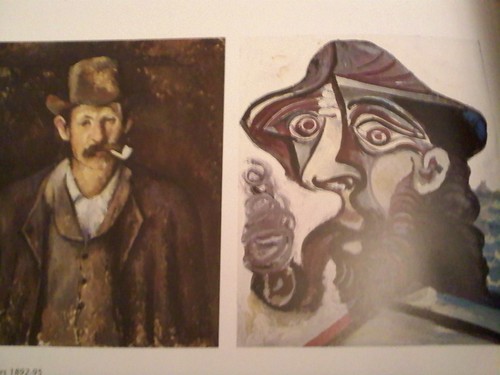
I was surprised at the number of paintings that Picasso did in homage to Cézanne. Even some of his well known works have subtle features borrowed from Cézanne. In the images below, you might think it was just coincidence that both men wear hats and smoke a pipe. However, the artist himself credits Cézanne's "Man with Pipe" as inspiration. Picasso, though, is likely to have read something deeper into the original painting. His interpretation seeks to duplicate the essence of the portrait, if not the brush strokes. Now that's a deep thought.
picture0003
Reblog this post [with Zemanta]

Some kind of joke

Last week my sister came to visit. She happened to arrive on the night that the Chusclan community theater was performing their latest production. It was apparently a comedy, though they were eliciting few laughs from the audience. The two characters pictured in the photo below represented the Captain of a ship to the New World and his erratic first mate. Eventually, the residents of Chusclan (which is NOT a port city) answer the call. We didn't stick around for the exciting conclusion.

Both characters wore masks with long comedic noses. It actually reminded me of the Feast of Fools scene from Disney's Hunchback of Notre Dame. I think this is a traditional theater form.


Reblog this post [with Zemanta]
 
Creative Commons License
This work by Ken Maschke is licensed under a Creative Commons Attribution-Share Alike 3.0 United States License.