Tuesday, September 15, 2009

Sore Feet in Barcelona

Remember those Family Circus cartoons showing the little kid's circuitous path through the neighborhood. At the end, he returns home and says something not-quite-funny like, "boy am I tired." That's the best mental image I can conjure to describe our two night stay in Barcelona.

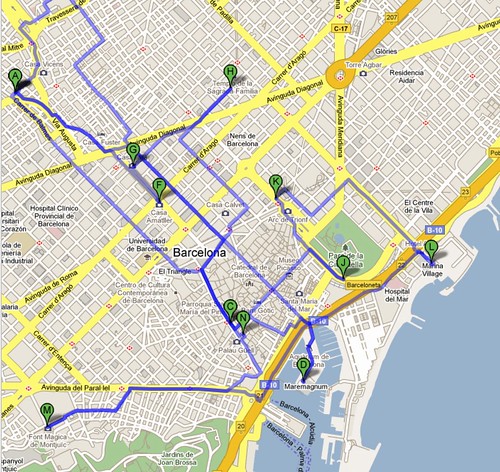
Barcelona Map

Our "Family Circus" map might look something like this Google map. The computer estimates a total walking distance of about 36km. Not bad for two days. To be fair, we did make use of the subway, but this estimate in no way considers all of our wanderings. In all we visited the following attractions:
  1. Parque Güell - Gaudí
  2. La Rambla - Pedestrian area & historic Barcelona
  3. Maremagnm - Harbor mall
  4. L'Eixample - Modern Barcelona
  5. Casa Batlló - Gaudí
  6. Casa Milló - Gaudí
  7. La Sagrada Familla - Gaudí
  8. Parque de la Ciutadella
  9. L'arc de Triomf
  10. La grande Casiono Barcelona - lost 6€
  11. Plaque Espanya
  12. Tarantos - live Flamenco
Reblog this post [with Zemanta]

Monday, September 14, 2009

Gaudy or Gaudí

Architect Antoni Gaudí envisioned a built environment in much greater harmony with nature. His major works, constructed between 1884 and 1926, were ahead of their time. In fact, it's rumored that upon receiving his university degree, the regent said, "Who knows if we have given this diploma to a nut or to a genius. Time will tell." Like his contemporaries, the impressionist painters, Gaudí is highly regarded today as an architectural innovator and the earliest authority on melding nature and design.

Gaudí spent most of his life in Catalonia. He attended college in Barcelona and continued to work for wealthy patrons in the city. Visitors come to Barcelona from around the world specifically to marvel at his many lasting creations.
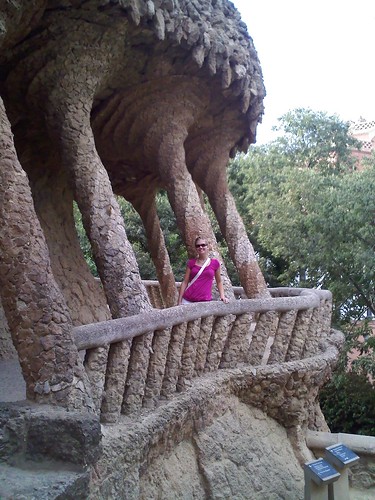
Our first destination upon arriving in Barcelona was the Parc Güell. The development was originally conceived as an über exclusive resort for the rich and famous. Cost overruns and a declining economy ended the commercial prospects for the park - lucky for us. It's now perhaps the biggest tourist attraction in the city. The park displays Gaudí's talent for integrating functional elements with nature. Several series of winding paths appear to grow out of hillside providing a promenade to the best views of the city. And while natural expression was Gaudí's passion, he's probably better known for the fantastic "candy land" pavilions and mosaics that greet guests to the park.

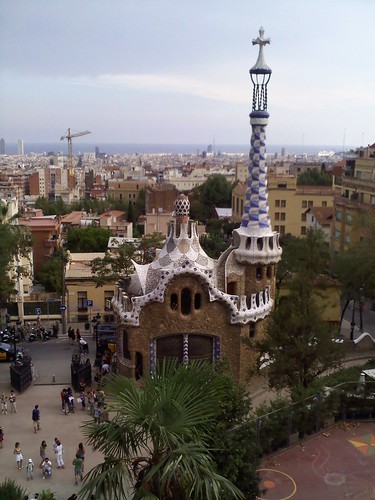
picture0194 picture0195

Though the critics and creditors may have lambasted Gaudí's works, his patrons were staunch defenders and provided their Gaudí designed homes as proof of genius. In l'Eixample neighborhood, we passed by two more masterpieces: Casa Batlló and Casa Milà. The houses exemplify the Art Nouveau style that Gaudí was pioneering. However, despite the radical curves in the facades and twisting balconies, the underlying structural systems were almost identical to the then-modern techniques being used by Burnham, Sullivan and other legendary Chicago architects. The buildings are steel framed, with self-supporting facades, and floor systems are provided by clay-tile arches spanning between steel beams.
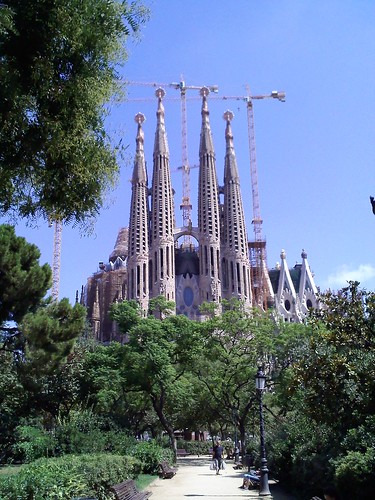
But was seldom content to rely on the innovations of others. He spent the last decades of his life looking for architectural and structural solutions to build a cathedral of unprecedented detail and complexity. La Sagrada Familia was Gaudí's magnum opus. Begun in 1884, it will remain under construction until 2026. The facades present a continuous scene of biblical characters and symbolic local animals. Inside, the columns shoot up and branch like trees into an awe-inspiring cathedral canopy. The 18 spires project ever higher until the tower for Jesus projects 170m (560 ft) into the sky.

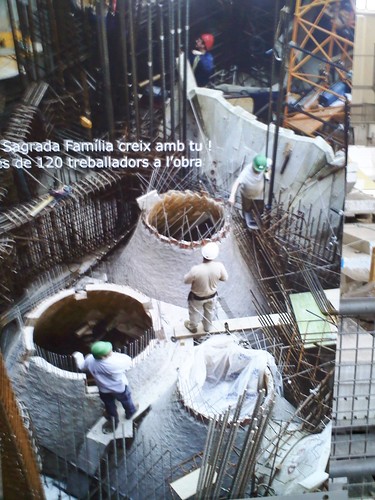
picture0220 picture0217

Gaudí's master plans were destroyed by anarchists during the 1938 Spanish Civil war. So architects, archaeologists and art history experts have been working side-by-side to recreate his vision. Meanwhile, modern engineering has been employed to enable the dizzying architecture. Tower cranes loom above the cathedral, lowering re-bar cages into place for the reinforced concrete columns.
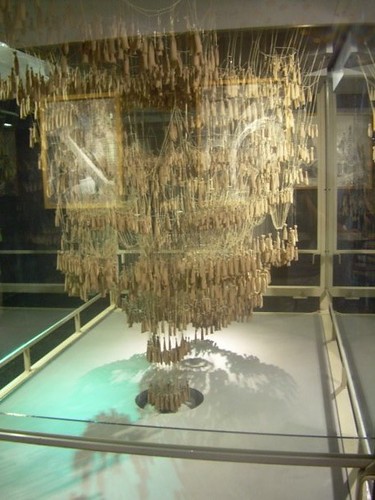
However, over a century ago, Gaudí was able to solve most of the engineering challenges with contemporary building techniques. He looked for efficiency in nature and experimented with intersecting hyperbolic shapes. To find shapes that would exist in pure compression - necessary for unreinforced masonry - he created ingenious models. He understood Newton's law, "for every action there is an equal and opposite reaction," and flipped his models upside down. He couldn't very well measure the compression in a block, but he could create a model with strings that only resisted tension. He added weights proportionate to the weight of his building materials to the strings until a complex but perfectly balanced form took shape. By taking a photo of the form and then flipping it upside down, Gaudí engineered a design that could be built with the most basic building materials - blocks.

Gaudí's genius had been proven in time. His understanding of aesthetics, natural shapes, and engineering principles marks him as a unique visionary. Architects would do well today to study the designs of Gaudí and become inspired to create designs that are more compatible with our environment.
Reblog this post [with Zemanta]

Barcelona - International City

Barcelona

Barcelona was not what I expected. It greatly exceeded my expectations for cleanliness, modernity and international appeal. Although I did not visit the city before it hosted the 1992 Olympics, I got the impression on this visit that Barcelona truly used momentum from that opportunity to become one of the great cities of the world. If awarded the Olympics, I hope that Chicago will endure a similar transformation. However, after experiencing Barcelona, I am less confident that Chicago has what it takes to host the world.

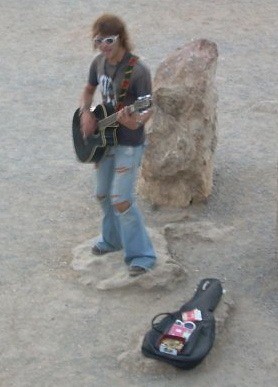
First off, Chicago lacks the crazy street performers - like this guy at the Parc Guell, who sung a hilarious rendition of At the Hop in a thick Spanish accent. Bonus points for the holey jeans and star-sunglasses. I think he was attempting to look American. La Ramblas, the main pedestrian thoroughfare, featured even more eccentric performers. The most popular was a guy under a sheet with a hand puppet that lunged out to scare people by saying, "hola!" Now where is that talent going to come from in the US?

More seriously and importantly, however, is Chicago's unpreparedness to communicate to non-English speakers. You might get buy with Spanish or Polish, but a majority of the world is going to struggle in Chicago. Most transit information in Barcelona, on the other hand, was printed in multiple languages. Restaurants made good use of pictures on their menus. And just about everyone we ran into had a satisfactory command of English. The Chicago Business Bureau better start handing out copies of Rosetta Stone.

Barcelona's transit system was incredibly robust. For a city nestled around several steep hills, it was possible to get just about everywhere by public transit. Chicago's El is helpful and historic, but it hardly offers the necessary level of coverage to destinations. Chicago may go toe to toe with Barcelona for architectural features, but I'm not sure that it has quite so many tourist destinations. Really, how does a 150 year old American city compete with one that boasts the square where Columbus was greeted on his return from the new world?

I don't mean to be down on Chicago. Despite my travels, I still believe it's one of the best cities in the world - in the summer. Chicago just needs to get serious and make some upgrades if it hopes to provide the international experience that the world is looking for.

Never before seen by humanity

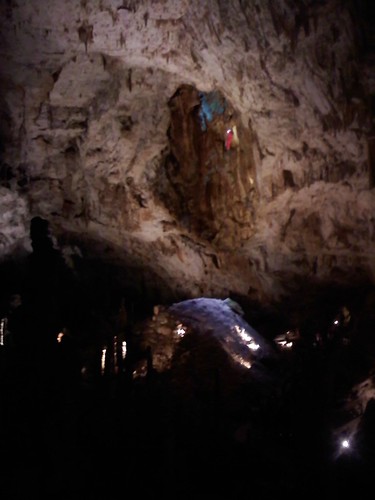
In 1935, the residents of Orgnac described the local legend of a bottomless pit to Robert de Joly, a renown cave explorer. To the people of the small farming village located between the Ardéche and Cèze rivers in southern France, there certainly would have been an aura of mystery surrounding the hole. Despite the danger, several residents, including a young boy, joined the speleologist in a descent through the cave.

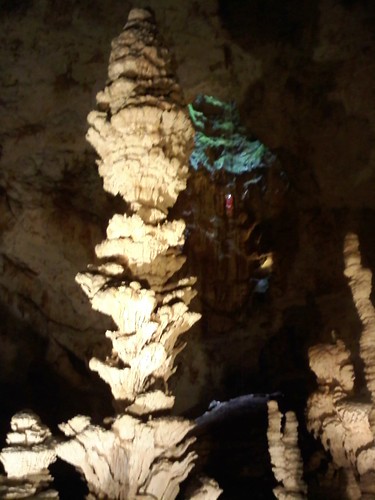
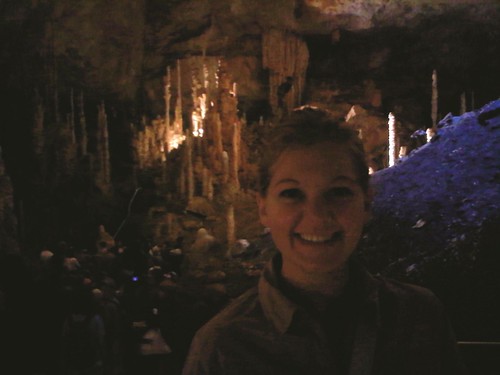
What they discovered was a spectacular cavern about 2.5 acres in area. Directly below their point of entry, they found a huge pile of debris, including animal bones dating back to the last ice age. Upon lighting the room, they observed thousands of concretions (stalactites and stalagmites). Some had grown up to 15m (approximately 50 ft) tall. In some areas of the cave, the stalactites and stalagmites were even found to grow until they connected in one continuous column.

This first massive room is just one of many in the vertically descending cave network. Because visitors must descend through the cave, in French it's called an Aven as opposed to a Grotte. Modern geologists suspect that the cave extends all the way from the Cèze river valley to the Ardéche river gorge to the north. In prehistoric times, the aven would have provided an underground waterway linking the two rivers. After the water levels of the two adjacent rivers subsided the cave would have dried out and the concretions began forming.

picture0146

Perhaps the most interesting story of the cave, however, is it's fight against human interference. Archaeologists have found no signs of human habitation of the cave. Robert de Joly was at least the first man to enter and then return alive. Fortunately for future generations, he was committed to the preservation and took immediate action with the local city council to prevent unsupervised visits and desecration of the cave. Despite these efforts, the cave was nearly ruined by an overwhelming influx of visitors.

Installation of an asphalt parking lot over the caverns prevented water seepage into the ground; the formation of concretions was stalled. Likewise, the air exhausted by visitors climbing back up the 700 steps to exit after visiting the third room, changed the cave's climate enough to encourage the growth of mass and algae on the walls. In the winter, when visitations declined, the organic matter would die, leaving an ugly black film. Attempts to power wash the cave walls caused further damage and permanently stopped the formation of stalactites and stalagmites in some locations.

Terrace

Fortunately, scientists realized some solutions to reverse these negative trends. The parking lot was torn out and turned into a terraced garden. And elevators were installed at the base of the third room to whisk visitors up to the surface. L'aven d'Orgnac has now regained much of its former luster. It is truly worth of being called a grad site de France.
Reblog this post [with Zemanta]

Friday, September 11, 2009

Toros Mousse

Growing up in rural Michigan, the county fair was always the highlight of the summer. As a 4-H kid, I spent the entire week at the fairgrounds. We were there every day feeding, cleaning, and showing our livestock. The most highly anticipated event of the week (except, of course, for the crowning of the 4-H king and Queen ;) was the Demolition Derby. We reveled in the barbarism, watching twisted heaps of metal collide and drivers frantically eject from their burning wrecks.


France has a parallel, never mind the sophisticated and stogy salons of Paris. Come down to the rural South of France, where real men test their mettle against Camargue bulls. And again, I'm not referring to the artfully choreographed bull fights popular in Spanish stadiums. No, I mean local untrained machisimo men in a pen with an angry bull and some rave-party foam and a pool of water and cotten-eyed-joe playing over the loud speaker. Now we're talking about entertainment.

Toros mousse is a spectacle. It's hard to believe that people would engage in such a sport. The most incredible aspect to me is that the guys jumping in the ring are just locals; they have no training. I could have jumped right in with the bulls too... if I was crazy. Young teens actually stand in between the high outer wall and an inner divider to get a better feel for the excitement. Sometimes, however, the bulls can jump over the first barrier, causing a wave of frantic leaping over boards an into the top ring of netting that confines the arena. At half time, all of the children are encouraged to run into the arena and play in the foam. They should be well prepared for frat foam parties at university.

After such years of indoctrination into the "sport," the men are willing to sacrifice their bodies for cash prizes and T-shirts. Now to be fair, they do cap the horns, so it's unlikely to get thoroughly gored - trampling is more likely.

There are some strategies. The bull doesn't see well in foam; making quick lateral maneuvers can save your tail. The bull tends to jump over the lip of the pool; while being pursued, if you duck under water against the edge of the pool, the bull will jump right over your position. This also earns you a point for successfully getting the bull in the pool. Finally, when fleeing toward the edge of the arena, be sure to plant off of the outer lip in order to spring over the inner boards and into the netting. Even if the bull makes the first jump, it will not have room to jump up after you. Instead, it will pursue the nearby spectators.

Really, you have to see it to believe it. I think toros mousse would impress even the most aggressive demo-derby enthusiast.
Reblog this post [with Zemanta]

Eating Boar's Head (and I don't mean cold cuts)

The hunting club met for the first time last Thursday. It didn't take long to bring home their first prize of the season. If you're thinking they brought home a high-point deer, think again. In these parts, the hunt is on for wild boar - sanglier, en français. We hear that they move very quickly and can charge when threatened. I'm not sure how exactly they're hunted.

I do know, however, that they are tasty. Sanglier sausage is a common offering in the local market. But we were in for a special treat when the captain of the hunt offered our landlord the boars head. It took André three hours to clean and prep the head. Then madame worked her magic to turn the grisly looking beast into paté. Apparently, the slow cooking process took another seven hours to complete.

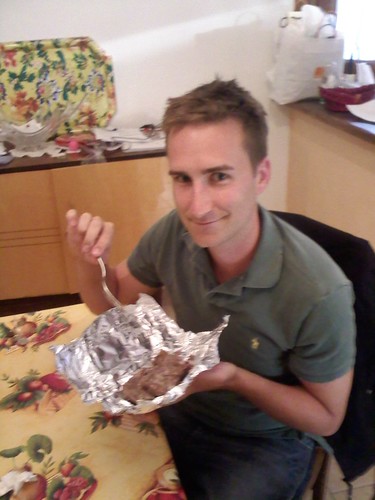
When the paté was ready, my visiting friend Mark took the first brave bite. It tasted incredible, but we all decided that it was better not to know the exact recipe or procedure. Bon appétite!
Reblog this post [with Zemanta]

Friday, September 4, 2009

Van Gogh's garden

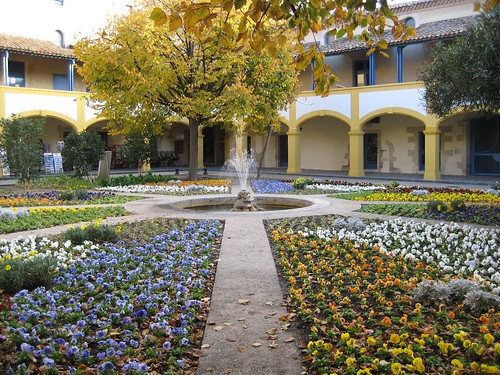
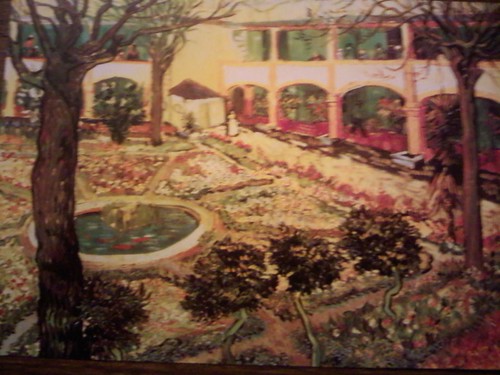
After being diagnosed with a mental disorder Van Gogh was admitted to a hospice in the city of Arles. Many of his most famous paintings were completed while in isolation here. Visitors now have the opportunity to walk through the gardens of the mediathèque where Van Gogh spent the final years of his life. After seeing the flowers of the courtyard in full bloom, I could better appreciate the liveliness of his painting of the same scene.

VanGogh

picture0001
Reblog this post [with Zemanta]
 
Creative Commons License
This work by Ken Maschke is licensed under a Creative Commons Attribution-Share Alike 3.0 United States License.