Showing posts with label Middle Ages. Show all posts

Wednesday, November 18, 2009

Gorges du Tarn

The remote villages tucked in between the steep cliffs of the Gorges du Tarn are shrouded in medieval mysticism. Given the ominous misty highlands above, the difficulty of journey and tough life of subsistence it's easy to understand why imaginations might run wild. Today, the sights of the gorge are no less inspiring. If you can handle the incessantly winding roads, it's a great place to enjoy nature.

IMG_4348.JPG

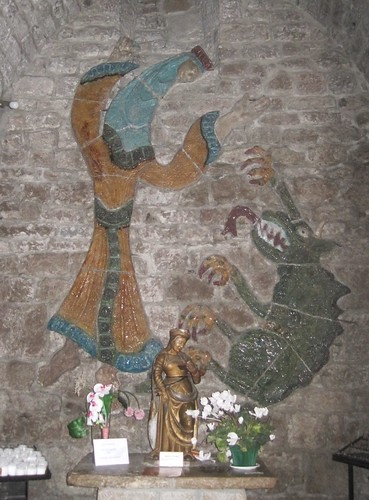
My favorite tale of tale of the Tarn comes from Sainte-Enimie, so named after the story's heroine. The story the this Merovingian princess began in Paris. She wanted to devote her life to God. However, her father wanted to marry his beautiful daughter off to one of the many suitors that had come calling because of her rare beauty. She refused them and prayed to receive an affliction that would hold the suitors at bay for good. To her initial delight, she fell ill with leprosy.

As her conditions worsened, she began to have second thoughts about her situation. Seeking a cure, she traveled to a remote region of France said to have cold healing waters. Near present day St. Enimie she found her salvation. She lived and took residence with the local monks. Her faith grew, but she was often tested. The legend even recounts her victory of a dragon-like incantation of the Devil himself.

View more of my photos of the Gorges du Tarn on flickr.
Reblog this post [with Zemanta]

Monday, October 12, 2009

les Baux de Provence

Legend has it that Balthazar, one of the magi that followed the star of Bethlehem, later retired to the South of France and established the community now known as les Baux de Provence. The Provencal people seem to have a knack for inserting themselves into biblical relevance. Anothe rexample is the story of les Maries de la Mer, which now famously sets the premise for Dan Brown's DaVinci Code.

Though the story of the city's founding is historically dubious, there is a legendary quality to the ruined fortress perched at the top of an imposing hill. Throughout the middle ages, les Baux de Provence exemplified the era. Devious castellas sometimes inhabited the fortress, using their might to extort the local populace. The walls were fortified to thwart marauding moors. At least twice, the castle was besieged by rival factions. Knights and troubadours promulgated the myth of chivalry and honor within the walls of the keep.

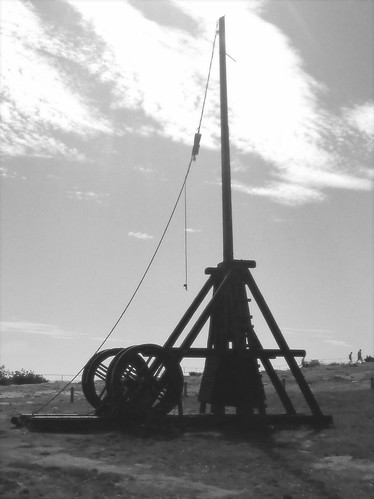
Today, the castle grounds are a sprawling museum for learning about the myths and truths of the middle ages. Little remains of the actual castle walls, having been ordered destroyed during the wars of religion. However, the installation of several replica siege machines and a thorough audio tour bring the hilltop fortress to life.

It seems that life in Les Baux was closely tied to rocky outcropping into which it was constructed. Many walls of the castle were simply carved out of the rock. Many peasants even made troglodyte homes within the soft stone. These rock walls survive where the man-made ramparts have fallen. As a result, it's interesting to note the ridges and corbels chiseled into the rock to receive wooden beams or act as washing basins. The local people even relied on the rock walls to receive water. Gutters were carved into the rock to channel water into cisterns.

picture0074

Medieval life was hard on the peasantry, but court life would have lacked many of the creature comforts that we cherish today as well. The keep of the castle is a small square shaft with limited lighting and only minimal opportunity for fireplace heating. Loyalty was also hot and cold. A duke hoping to replenish the ranks of his warriors with a mercenary knight or desiring some entertainment from a troubadour might well find his wife swept away into a courtly love affair by these supposed compatriots.

picture0065

Today, you're more likely to lose your wife among the maze of specialty shops in the small village. There is no permanent city to speak of, it's entire existence is based on a reputation as one of the most beautiful villages in France - and this is true.

View more photos of les Baux de Provence on my Flickr page.
Reblog this post [with Zemanta]

Tuesday, September 29, 2009

Aigues Mortes

Before embarking on his famous but ultimately futile crusades, Saint Louis (King of France) realized that his nation didn't have a suitable Mediterranean port. The spot he chose for his new naval fortress was located in the salt marshes of the Camargue. This region was largely considered uninhabitable at the time. Cholera and pestilence were spread by mosquitoes bred in the still waters. The locals called it Aigues Mortes, meaning dead water.

picture0044

Unswayed by difficulties in encouraging workers, settlers and soldiers to relocate to the region, he pressed on and re-construction of the town was completed around 1248. The fortress city was expanded by later French Kings.

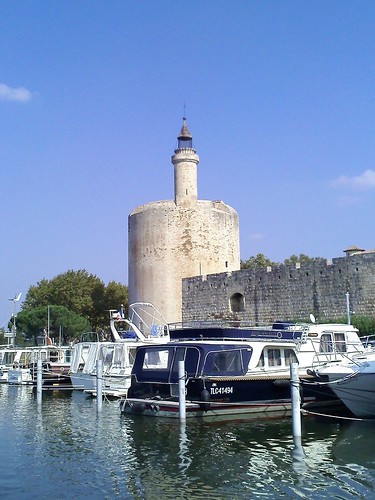
Only the Constance Tower remains of Louis' original fortifications. Its thick walls are considered impregnable, perfect for a prison. Following revocation of the Treaty of Nantes, which had granted Calvinists some freedoms in Catholic France, Aigues Mortes' walls were used to imprison the protestants. The tower of Constance was duly named after a female inmate who spent 38 years in captivity.

Over time, the shifting alluvial basin of the Rhone rendered the port of Aigues Mortes unnavigable to ocean-going vessels. This, in effect, served to preserve the medieval city. Its now regarded as one of the most complete medieval naval fortresses in Europe. As such, its a huge tourist draw. The crusader armies have been replaced by legions of retirees. Instead of riding horses through the city streets, tourists can board the senior train for a guided tour in five languages.

picture0035

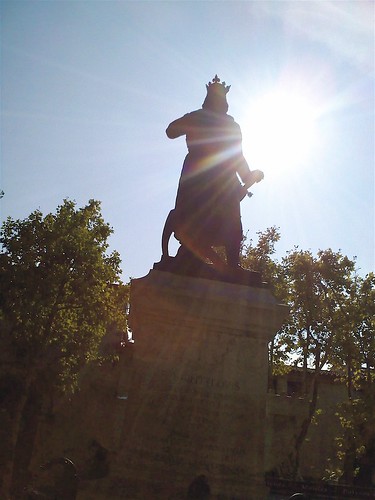
Despite its dangerous past and touristy present, Aigues Mortes is a unique and enjoyable city. After wandering around the ramparts, it's best enjoyed with a crêpe and café in the central square right in front of the statue of Saint Louis.


Reblog this post [with Zemanta]

Thursday, September 3, 2009

Arles, Roman Metropolis

I first visited Arles two years ago. The well-preserved Roman ruins captured my imagination. I wrote the following account in a local restaurant that very day. On my second visit, I was equally impressed with the city.

(November, 2007) The Roman Amphitheater or Arles sits at the highest point in the city and still dominates its surroundings. Amazingly, even though the structure was built in 90 A.D., it is still being used today - regularly showing bull fights since 1830. The monument is 136 m (~450 ft) long and is ringed by 60 arches. Twenty thousand spectators could have been comfortably seated to watch gladiator duels and exotic animals fight. In the middle ages, the structure was converted into a fortress. At that time, over 200 homes and two churches took up residence within the friendly confines.

IMG_0641

I entered through the front gate, just like a typical Roman would have done. It wasn't hard to imagine the bowl filled with thousands of spectators. I hiked up to the top of one of the medieval towers for a bird's-eye view. From that vantage, I could see all of Arles, and I imagined how medieval watchmen would have been able to spot invaders from miles away. Only a slight metal grandstand reminded me that it was 2007. Having worked on some stadiums back home, I was surprised by how little the basic arena concept has changed.

Next, I viewed the ruins of a Roman theater. The structure was originally built up off of ground level and included two levels of seating and huge stage area. In ancient times it would have looked much like a modern performance hall. History has not treated the first century B.C. structure as well as the adjacent amphitheater. Only the lower seating bowl and two of the hundreds of ornate columns that would have decorated the structure still remain.

RomanTheater

Entertainment may have been for special occasions, but every afternoon, the Roman population would visit the baths. The process included a sauna treatment, hot bath, lukewarm rinse, some laps in the swimming pool and finally a massage. Much of the Roman baths of Arles remain to this day. Unfortunately, only a half-dome remains of the roof, and most of the floors are also gone. This allows modern visitors to walk through the ancient furnace rooms.

picture0120

I had a great time exploring the Roman ruins, market squares, and natural wonders of Provence. It is easy to see why so many people continue to visit the region in search of a muse. A special experience awaits those who can draw inspiration from the magnificent historic structures.
Reblog this post [with Zemanta]

Thursday, July 30, 2009

La-Roque-sur-Cèze

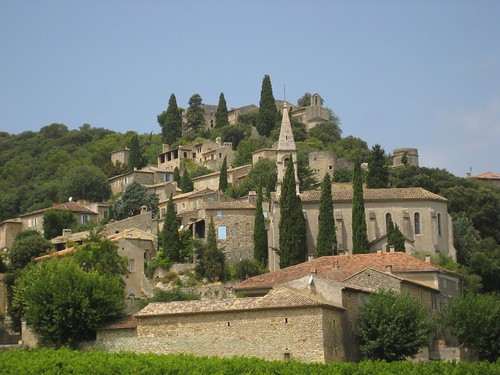
Far from being the magical times described in countless fantasy stories, the medieval era was more remarkable for the savagery displayed by roaming bands of heavily armed bandits and and equally greedy warlords. Many common people were forced off of their land and forced to live in villages for protection from bandits or for extortion by castellans. In many cases, these enclaves were built on the peaks hills. A drive through rural France reveals several of these medieval cities.


Today, these villages leverage their hilltop locations as tourist destinations. La-Roque-sur-Ceze is one of the most picturesque examples. The 3€ parking fee no doubt pays for a good deal of the city's operating expenses. The cobblestone streets are kept immaculately clean, while the homes appear to be kept in order by wealthy artisans. The peak of the hill appears to be a massive private residence - fit for a duke of course.

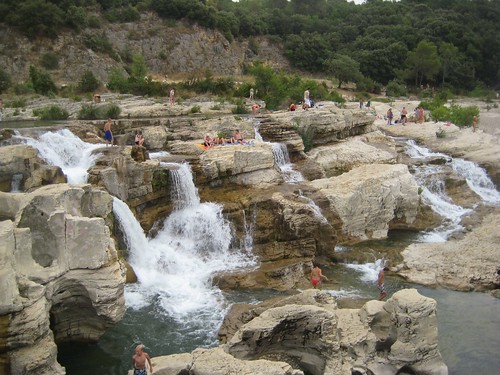
Another tourist attraction is located down the river, past the one-way-only 12th century stone bridge. Here the Cèze river descends through a series of cascades. Because of the porous bedrock, sharp chasms have been opened up by the falling water. Slightly further down river, more weathered areas of rock result in a series of hydraulic chutes and whirlpools. Although signs warn repeatedly of under-toes and unpredictable water levels, this area is a favorite of fearless kids.


On the day we arrived, the small canyon was teeming with people. Although an approved beach area is located in an official safe area of the river, the waterfalls and canyons hold the most attraction. Next time I'll be wearing my bathing suit too.

View more of my photos of La-Roque-sur-Cèze on flickr.
Reblog this post [with Zemanta]
 
Creative Commons License
This work by Ken Maschke is licensed under a Creative Commons Attribution-Share Alike 3.0 United States License.